Your Hips Need More Than Strong Glutes: Why Your Core Matters
When we think about building stronger hips, we often go straight to the glutes: bridges, clams, side-lying leg lifts, and squats. But there’s another important piece of the puzzle that can make those exercises more effective—a strong, active core.
Your core and hips are designed to work together. The muscles of your abdomen help stabilize your pelvis and spine, creating a more stable foundation from which your hip muscles can move and produce force.
In other words, strong hips don’t work in isolation. They need a strong center to support them. When your core muscles are active, they help control the position of your pelvis while your hip muscles create movement.
Think of it like a stable platform. If the platform is moving around while you’re trying to move your leg, your hip muscles have to work harder to control the movement. But when your core helps stabilize the pelvis, your hip muscles have a more stable foundation from which to work.
This connection is more than just theory. Research by Chan et al. (2017) looked specifically at what happens to hip muscle recruitment when abdominal core activation is added to common therapeutic hip exercises.
What the Research Found
The researchers studied 20 healthy young adults while they performed three common hip exercises:
Clams
Side-lying hip abduction
Prone hip extension
The participants performed each exercise with their normal level of core activation and then with enhanced abdominal core activation. The researchers used surface electromyography (EMG) to directly measure activity in the abdominal and hip muscles.
The result? Adding abdominal core activation increased the recruitment of several key hip muscles, including the gluteus medius and gluteus maximus.
Why Does Core Activation Help the Hips?
One explanation is the relationship between the abdominal muscles, pelvis, and hip muscles. When the core is engaged, it can provide greater stability around the lumbar spine and pelvis. This gives the hip muscles a more stable base from which to move.
The researchers suggested that improved pelvic stability may also help reduce compensatory movements such as excessive pelvic tilting or lumbar spine hyperextension during hip exercises.
This is especially important when you're trying to strengthen the glutes. For example, during a hip extension exercise, you want your gluteus maximus to help extend the hip. But if your pelvis isn't well controlled, you may compensate by arching your lower back or changing the position of your pelvis. Now the movement isn't coming entirely from the hip. The goal isn't simply to move the leg—it’s to move the leg while maintaining control of the pelvis and spine.
Better core and pelvic control can help you:
1. Improve hip stability
Your gluteus medius and gluteus maximus play important roles in controlling the position of the pelvis and femur. Giving these muscles a stable foundation can help them do their job more effectively.
2. Get more out of your hip-strengthening exercises
If your goal is to strengthen your glutes, simply doing more repetitions isn't always the answer. Better alignment and muscle recruitment can make the exercise more intentional.
Have you ever done a set of bridges or clams and thought, "Why am I feeling this everywhere except my glutes?"
It could be that your body is finding a way to compensate. Adding abdominal activation may help you feel the work where you want it—around the hip—rather than compensating through your lower back or pelvis.
Activating your core in these exercises helps you maintain better pelvic control while you move your hip, allowing the glutes to contribute more effectively.
3. Improve control of the pelvis
Your hip doesn't operate independently of your pelvis. Every time you walk, climb stairs, stand on one leg, squat, or change direction, your pelvis needs to remain controlled while your hip moves. Core strength contributes to that control.
Core activation doesn't mean sucking your stomach in or gripping your abs as hard as possible.
In the Chan et al. study, enhanced core activation was achieved through an abdominal wall bracing maneuver that produced a measurable level of internal oblique activity. The researchers were looking for controlled activation—not maximal effort.
At Align Pilates & Physical Therapy, we think about core strength as how well you can connect your breath, your trunk, your pelvis, and your limbs while you move. The goal is: Stable center → controlled pelvis → stronger hip movement.
That kind of strength is useful far beyond the Pilates studio. It's what helps you pick up your child, carry groceries, hike a Colorado trail, get up from the floor, or move through a workout with greater control.
Try This the Next Time You Work Your Hips
Amy DiRuzzo, a Doctor of Physical Therapy at Align Pilates & Physical Therapy in Denver, demonstrates 3 exercises that target both the core and glute muscles to help you better work your hips:
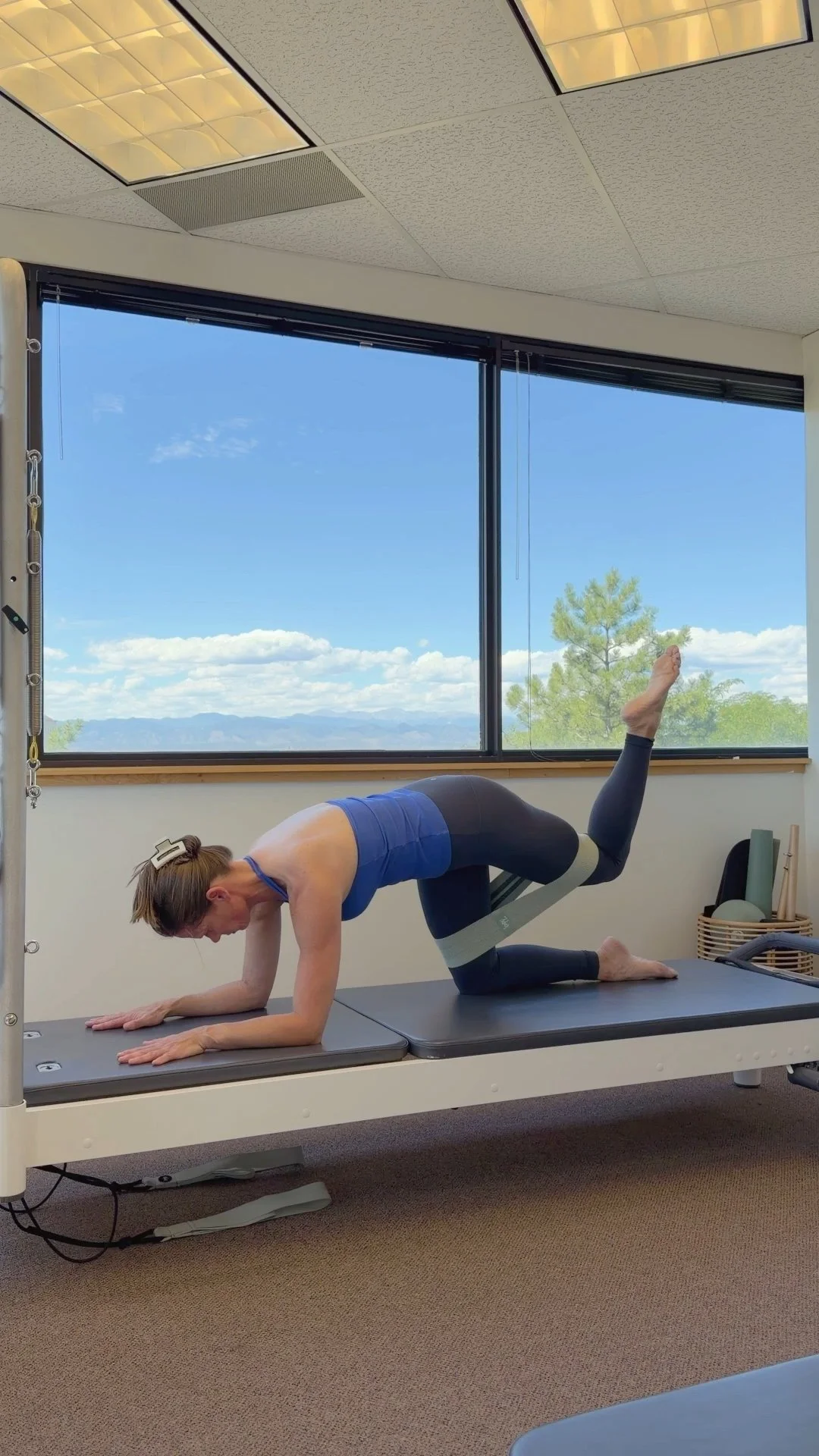
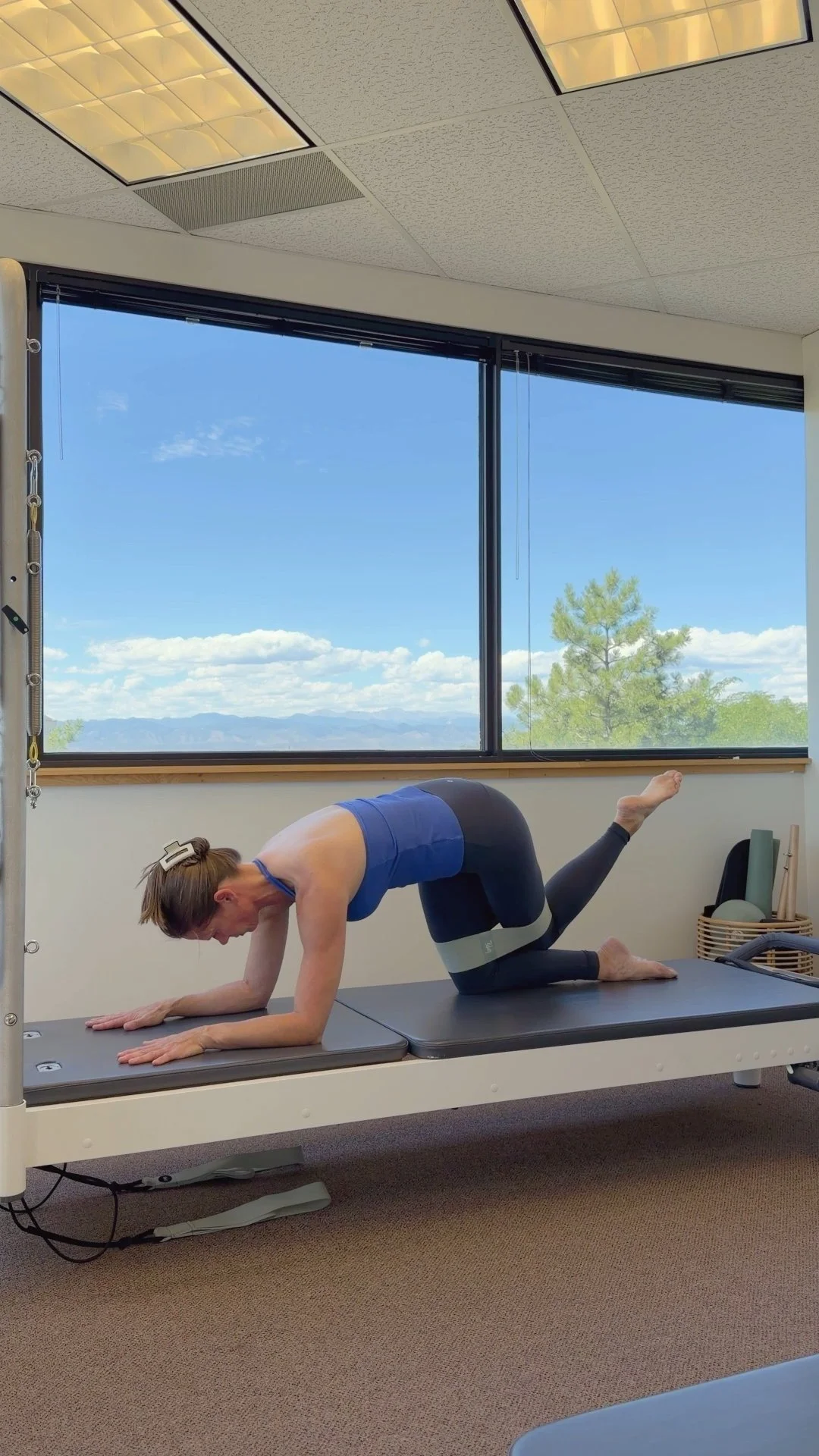
Crossover Donkey Kick: Use your glutes to press one leg up into the band. Cross the knee behind the other one on the way down. Keep breathing deeply, drawing your low abs in as you exhale. Your core will help you keep your pelvis level and even, avoiding compensations with your back muscles.
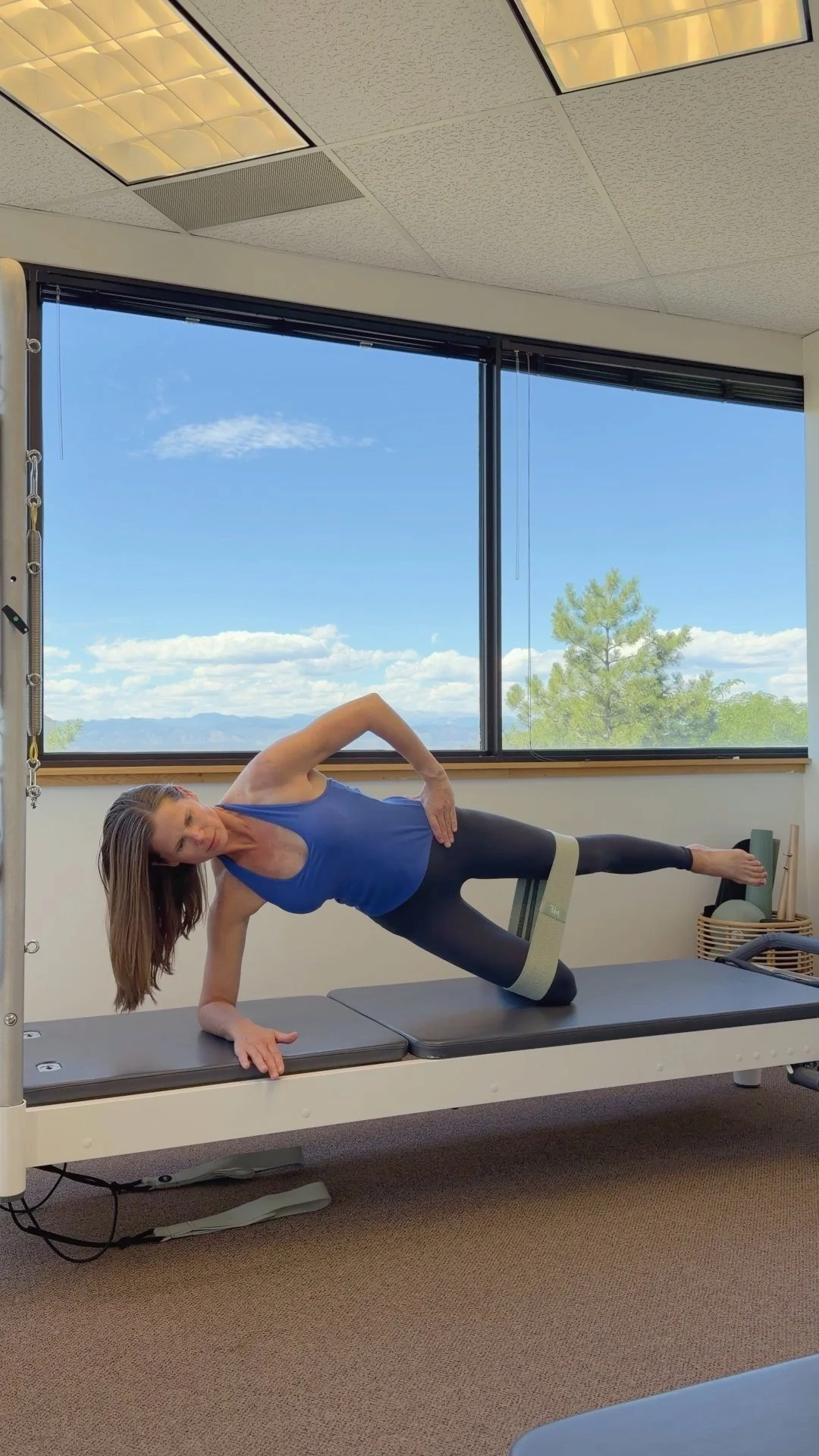
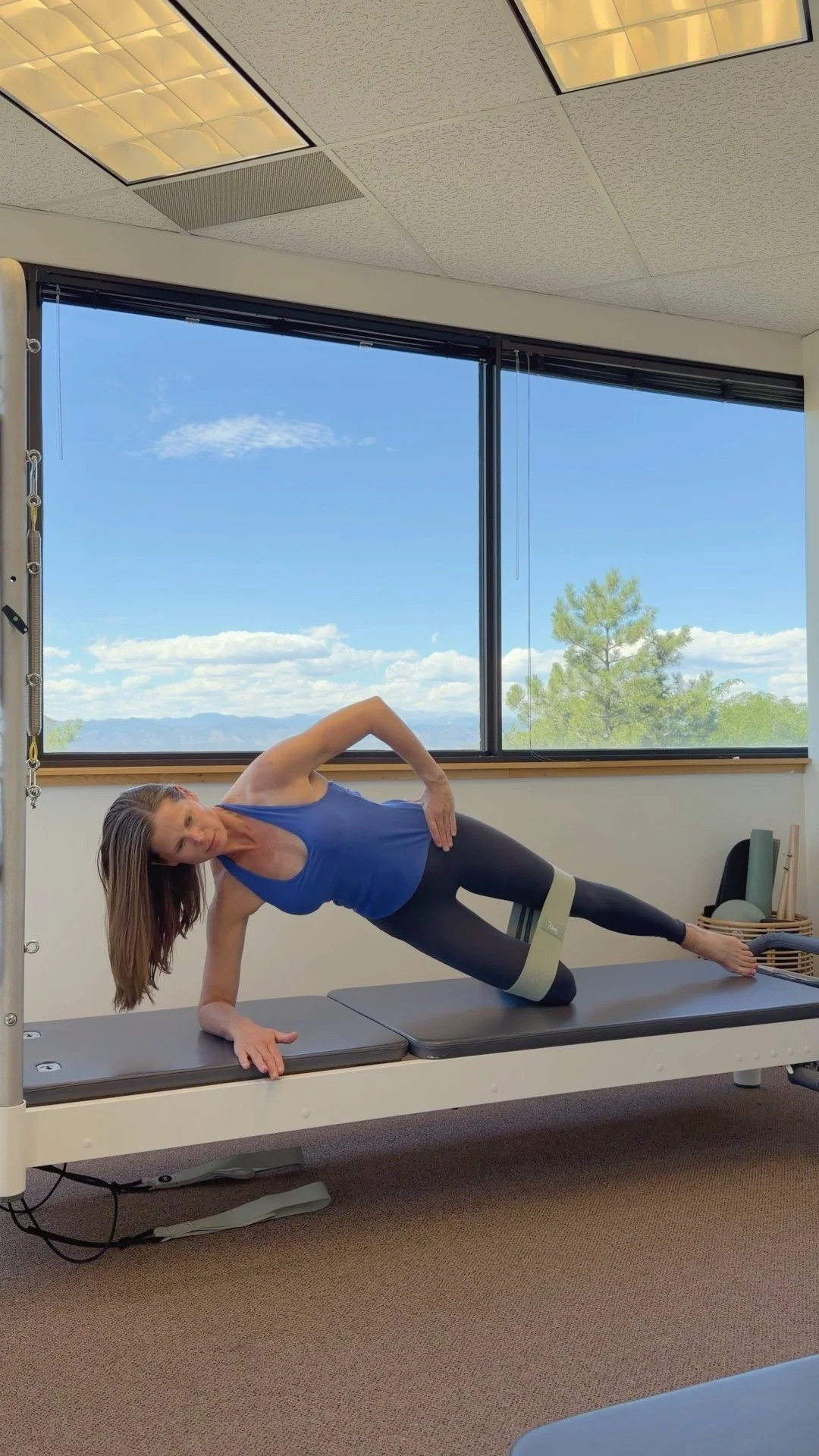
Side Plank with Leg Lift: Lift your body up to a side plank with the elbow and bottom knee on the mat. Breathe deeply, drawing low abs in towards your spine on your exhales to keep your trunk and pelvis still. Then lift and lower your top leg, working both the top and bottom glute muscles.
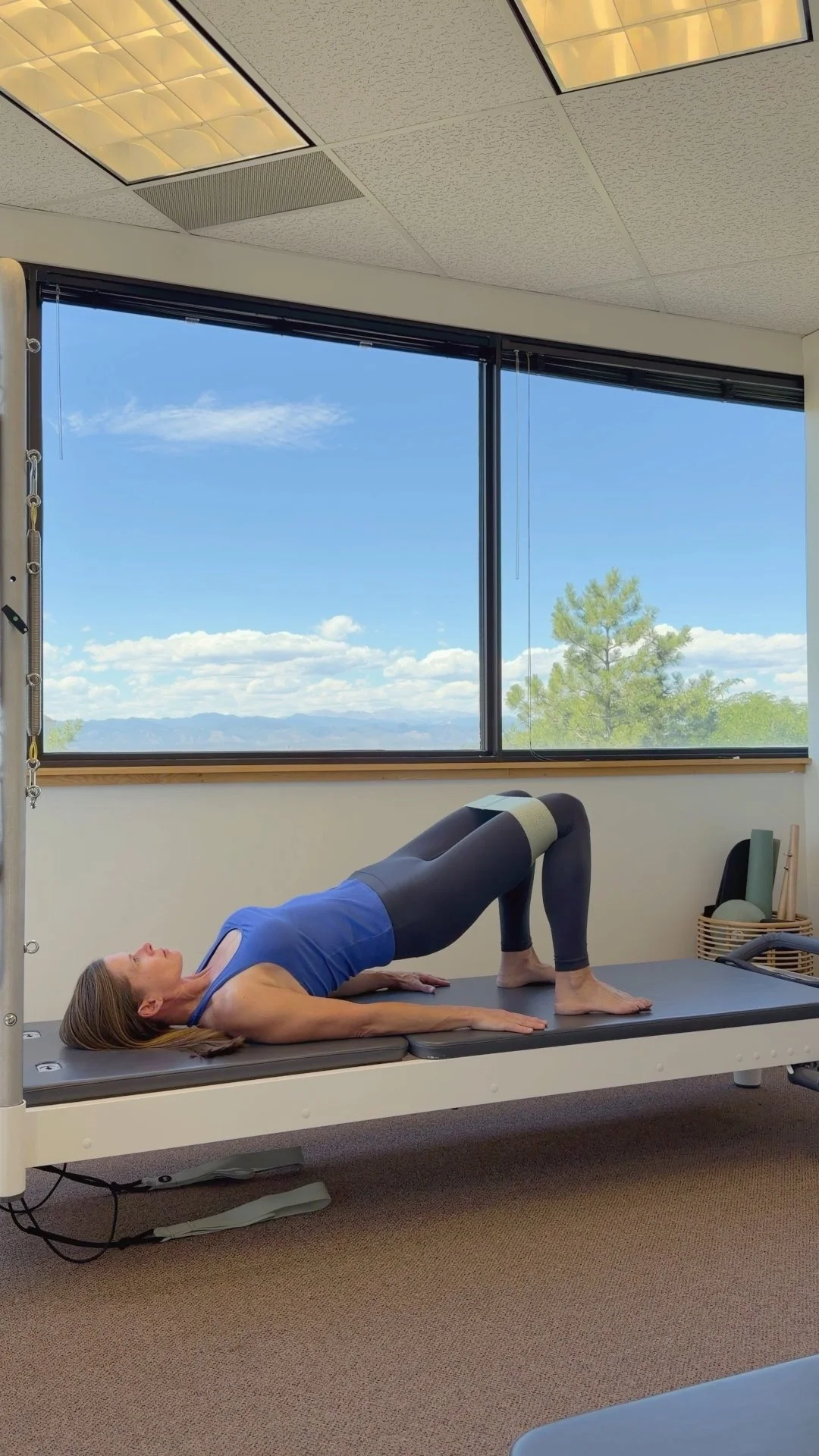
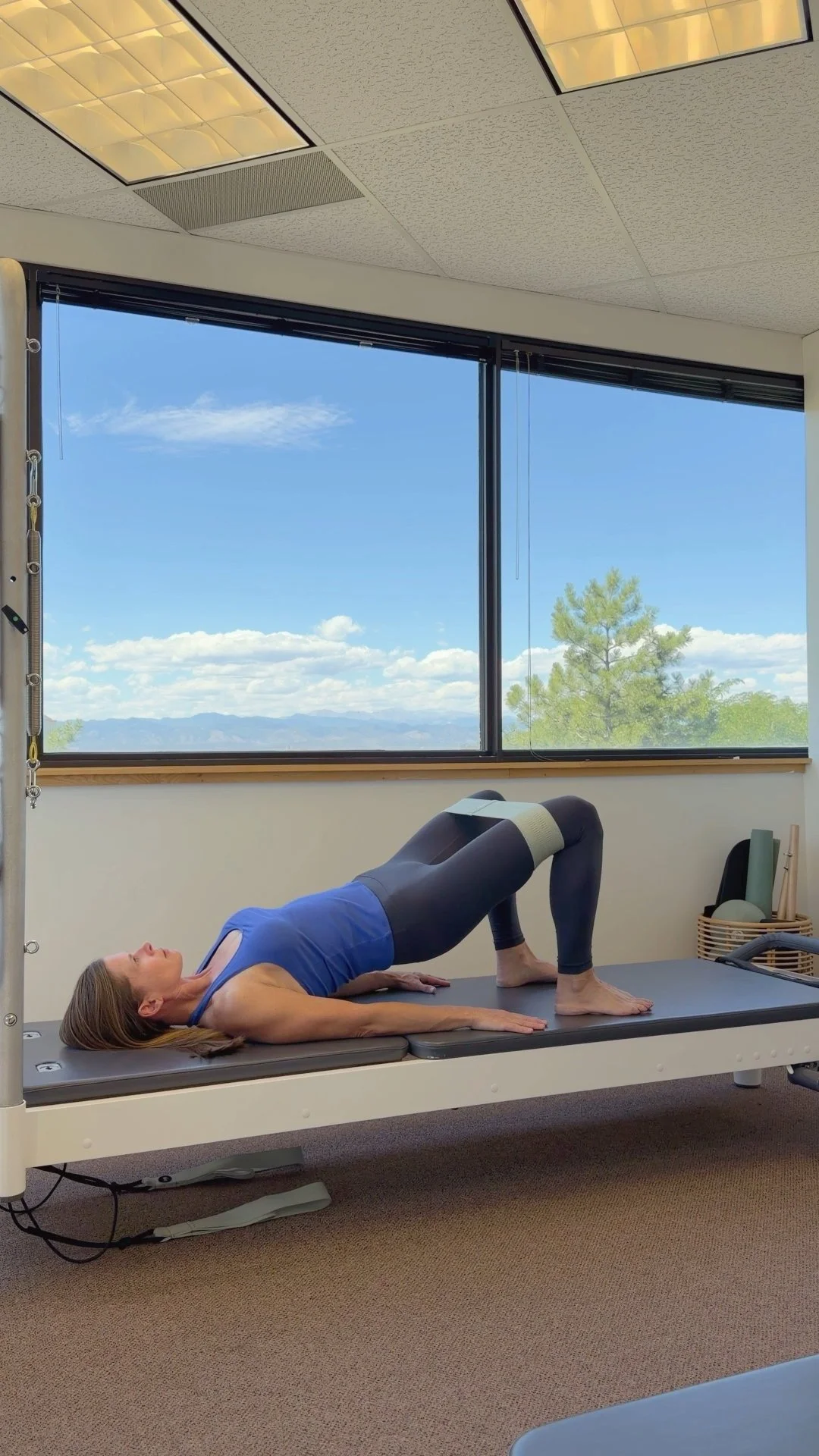
Bridge with Hip Abduction: Lift your hips into a bridge, drawing your abs in to support your back. Then inhale to press the band open with your side glute muscles and exhale to release.
Ready to Build a Stronger Connection?
At Align Pilates & Physical Therapy, we don't believe in simply exercising a body part. We help you understand how your body works together so you can move with more strength, control, and confidence. Strong hips start with a strong connection through your center.
If your hips feel weak, painful, or tight, come move with us and discover what a stronger core-to-hip connection can feel like.
REFERENCE:
Chan, M. K. Y., Chow, K. W., Lai, A. Y. S., Mak, N. K. C., Sze, J. C. H., & Tsang, S. M. H. (2017). The effects of therapeutic hip exercise with abdominal core activation on recruitment of the hip muscles. BMC Musculoskeletal Disorders, 18, 313.
Interested in a personalized Pilates/Physical Therapy session to strengthen your hips and core? Reach out and let’s talk!
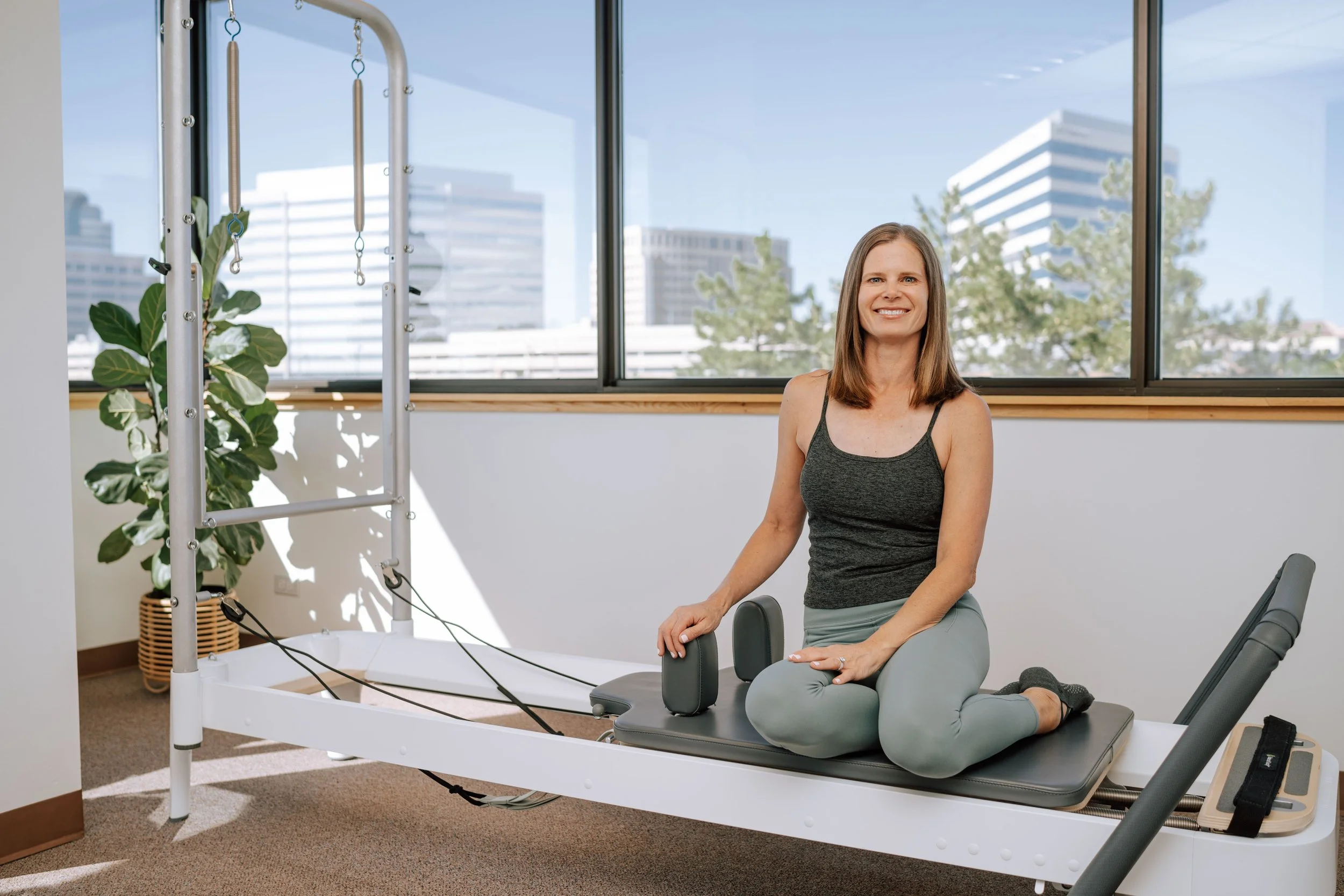
Amy DiRuzzo is a Doctor of Physical Therapy and Nationally Certified Pilates Teacher in Denver with more than 15 years of experience in women’s health. She helps mothers build deep, inner core strength the right way. If you have experienced a C-section, Diastasis Recti, back pain, pelvic floor dysfunction or just generalized core weakness, her workouts are perfect to help you safely regain strength and confidence in your body, allowing you to return to the adventures you love.